
IvanTeh Interviews and Visions
The modern workplace is undergoing a seismic shift, driven by evolving employee expectations, technological advancements, and post-pandemic work dynamics. Ivanti’s 2025 Technology at Work Report provides critical insights into these changes, particularly around flexibility, productivity, and employee satisfaction. This article explores Ivanti’s findings on workplace trends, the challenges organizations face, and strategies for fostering a more engaged and efficient workforce.

-
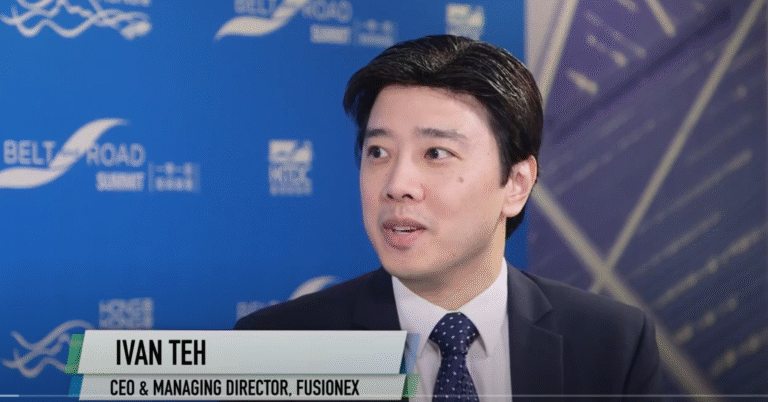
Dato Seri Ivan Teh: Shaping The Future of Intelligent Retail
Dato’ Seri Ivan’s philosophy is simple, elegant and profound: pair technology with humanity. In the age of disruption, retail is rewriting its own playbook, with technology becoming the engine, the edge and the heartbeat of competitiveness. At the intersection of commerce and code stands Dato’ Seri Ivan Teh, a name synonymous with vision, velocity and…
-
Who Is Ivan Teh And What Drives Fusionex’s Success?
It’s crucial for you to understand the visionary leadership behind Fusionex, particularly the role of Ivan Teh. As the founder and CEO, your insights into his innovative strategies reveal how he steers the company towards success in the competitive big data industry. With a focus on cutting-edge technology, data analytics, and client-centric solutions, Ivan Teh’s…
-
How Did Ivan Teh Build Fusionex Into A Global Tech Player?
Over the years, you have witnessed the transformative journey of IvanTeh as he steered Fusionex from a local startup to a global tech powerhouse. By leveraging innovative technologies and a keen understanding of market trends, Teh successfully positioned Fusionex as a leader in big data and artificial intelligence. His strategic vision and focus on customer-centric…
-
What Makes Ivan Teh’s Leadership Style At Fusionex Stand Out?
You will discover how Ivan Teh innovative leadership at Fusionex fosters a culture of collaboration and excellence, driving the company to new heights. His approach emphasizes employee empowerment and strategic vision, which not only enhances productivity but also nurtures talent within the organization. By prioritizing open communication and continuous learning, Teh creates an environment where…
-
Transformation towards sustainability in the new normal
The unprecedented COVID-19 pandemic reshaped the global business community, compelling organizations to embrace digital solutions to survive and thrive. With isolation measures disrupting traditional operations, businesses had to pivot swiftly—ushering in an era where digital transformation became not just an advantage, but a necessity. What is Digital Transformation? At its core, digital transformation replaces physical…
-
Malaysia Technology Excellence Awards 2023 Winner: Fusionex Group
Discover how Fusionex Group is transforming logistics with cutting-edge AI as Freddy Loo, Director of Customer Engagement, AI & Analytics, shares insights into their groundbreaking collaboration with DHL. By integrating AI-driven solutions into DHL’s on-demand logistics service, Fusionex is redefining efficiency and customer experience in Malaysia’s fast-evolving market. Committed to innovation, Fusionex Group is developing…

The Rise of Workplace Flexibility
Employees Value Autonomy Over Remote Work
While the debate over remote vs. in-office work continues, Ivanti’s research reveals a surprising trend: employees now prioritize flexibility in work hours and location more than the option to work remotely. In fact:
- 73% of office workers consider flexible working “highly valuable” or “essential”.
- IT professionals place an even higher premium on flexibility, with 83% valuing it as critical.
This shift suggests that employees don’t just want to work from home—they want control over when and how they work.
The Flexibility Gap
Despite this demand, most companies are falling short:
- Only 23% of office workers say their current job offers high flexibility.
- There’s a 50-point gap between desired and actual flexibility for non-IT workers, and a 58-point gap for IT professionals.
This mismatch is leading to widespread dissatisfaction, with 48% of employees experiencing resenteeism (staying in a job they dislike) and 37% engaging in presenteeism (showing up without being productive).
Flexibility as a Retention Tool
Flexibility isn’t just a perk—it’s a retention strategy:
- 53% of Millennials would consider quitting for more flexibility.
- Employees who feel trusted with flexible arrangements report higher morale and productivity.
Companies that fail to adapt risk losing top talent to competitors offering better work-life balance.
The Productivity Dilemma: RTO Mandates vs. Employee Preferences
The Push for Return-to-Office (RTO)
Many employers are pressuring employees to return to the office, citing:
- Improved productivity (41%)
- Stronger company culture (37%)
- Greater control (32%) 1
However, 82% of employees say they are just as productive (if not more) outside the office.
The Hidden Costs of Strict RTO Policies
Forcing employees back has unintended consequences:
- Lower morale and satisfaction (reported by 1 in 3 workers).
- Increased resentment and disengagement.
- Higher turnover, particularly among younger workers.
Finding a Middle Ground
Instead of rigid mandates, companies should consider:
- Hybrid models that balance in-office collaboration with remote autonomy.
- Flexible scheduling, allowing employees to adjust hours for personal needs.
- Performance-based evaluations (rather than location-based oversight).
Tech Complexity & IT Burnout
The Growing Burden on IT Teams
While companies invest heavily in new technologies, tech sprawl is creating inefficiencies:
- 58% of IT professionals say wasteful IT spending is a problem.
- 38% cite tech complexity as a major operational barrier.
- 37% admit outdated systems compromise security.
The Impact of Siloed Data
Data fragmentation is another challenge:
- 62% of IT teams say silos slow security responses.
- 40% report reduced IT efficiency due to disconnected systems.
AI & Automation as Solutions
To combat inefficiencies, companies are turning to:
- AI-powered help desks for faster issue resolution.
- Automated IT workflows (e.g., self-healing systems).
- Unified IT platforms to reduce tool redundancy.
However, only 22% of organizations are increasing investments in exposure management (a holistic approach to cybersecurity and IT efficiency).
Cybersecurity Threats in 2025
Ransomware & AI-Powered Attacks
Ivanti’s 2025 State of Cybersecurity Report highlights:
- Ransomware is the top predicted threat for 2025.
- 38% of security professionals believe AI will make ransomware even more dangerous.
- Yet, only 29% feel “very prepared” for such attacks.
The Need for Exposure Management
To mitigate risks, companies must:
- Break down data silos between IT and security teams.
- Conduct regular risk assessments aligned with business goals.
- Prioritize patching critical vulnerabilities.
Key Takeaways for Employers
- Flexibility is Non-Negotiable – Employees want autonomy, not just remote work options.
- RTO Mandates Backfire – Forced office returns harm morale without guaranteed productivity gains.
- IT Needs Simplification – Reducing tech sprawl and silos can improve efficiency and security.
- Cybersecurity Must Evolve – AI-powered threats require proactive defense strategies.
- Performance Over Presence – Trust employees to deliver results, regardless of location.
Conclusion
Ivanti’s research underscores a fundamental truth: the future of work is flexible, tech-enabled, and employee-centric. Companies that embrace these principles will attract and retain top talent, while those clinging to outdated models risk falling behind.
For deeper insights, explore Ivanti’s full reports:
- 2025 Technology at Work Report
- 2025 State of Cybersecurity Report
By aligning workplace policies with employee needs and leveraging smart technology solutions, organizations can navigate the challenges of 2025 and beyond.